/// Sinopsis
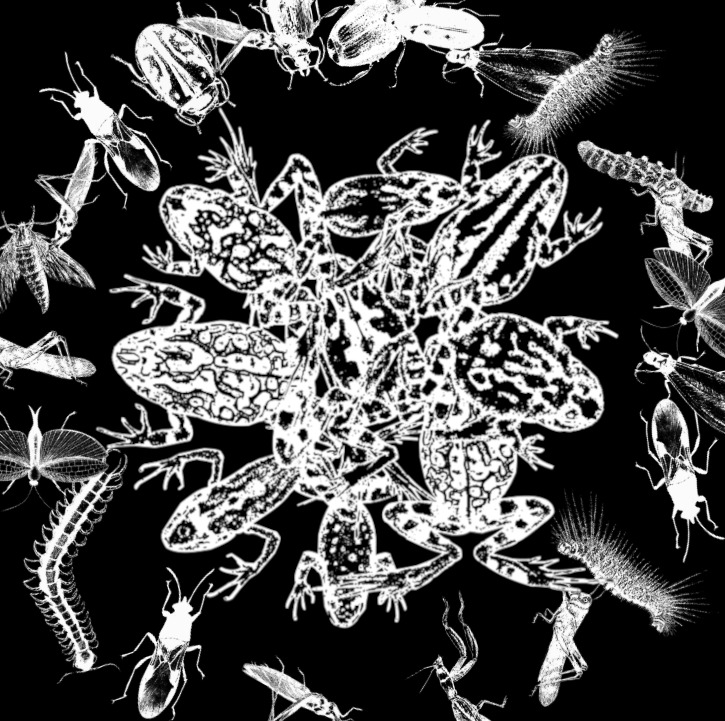
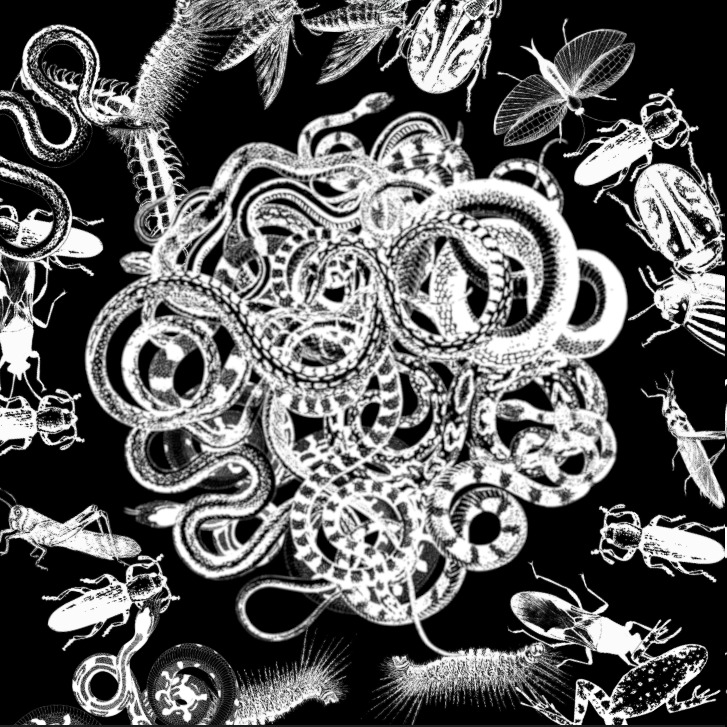
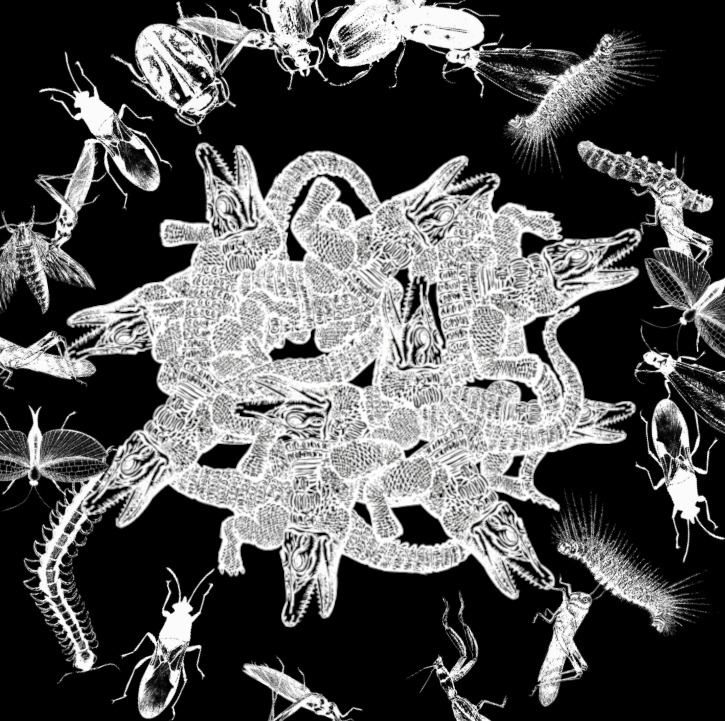
e-Arena is the 2025 creation in a series of artworks reimagining biblical plagues as contemporary metaphors for global crises. These symbolic “plagues,” here represented both by Brazilian fauna reptiles coexisting with malevolent insects, address issues spanning social, environmental, cultural, and civilizational concerns, reflecting on a future fraught with challenges.
Originally conceived as static graphic patterns designed for application on various surfaces or installation walls and floors, this imagery has evolved in the current artwork (as it did in the previous COLLOQUIUM, 2022) into a digital interactive sound animation—a metaphorical ecosystem where large virtual insects populate the walls, while three predator species—frogs, crocodiles, and snakes—occupy the floor.
Visitors play an active role in this dynamic ecosystem. By stepping on the predators, they trigger the affected group to leap onto the walls and feed on the insects before returning to the floor.
Simultaneously, the movement of visitors within the installation provides sustenance to the insects, enabling their movement and reproduction. These interactions encapsulate the intricate dynamics between species, offering a metaphor for the interconnectedness and tensions present in both real and virtual ecosystems.
/// Conceptual Framework
e-Arena poetically explores the enduring theme of interspecies dialogue—or its impossibility. It serves as a layered metaphor, addressing not only ecological interdependencies but also the nature of digital conversations within social networks. The prefix “e-” highlights this duality, alluding to both “ecosystem” and “electronic” interactions. The virtual predators and insects mirror the dynamics of online communication, where interactions can rapidly shift from generative to predatory, from cooperation to conflict. Visitors’ interventions can be seen as metaphors for the unpredictable impact of human actions within these digital spheres.
The immersive sound environment, enriched by predator and insect-specific tracks, further heightens this sensory experience, often bordering on the intolerable, thereby intensifying the tension and unease inherent in the ecosystem’s dynamics.
_ by Regina Silveira, 2025
in collaboration with: Marcos Cuzziol (software), Demétrio Portugal (technology production), Rogério Rochlitz (sound design).
Context:
The artist began to work with the creation of a Brazilian fauna that could be understood as “exotic,” incorporating additional species into the imagery of insects. The intention was to create works that evoked the legendary and historical tapestries produced in the Netherlands following the discovery of Brazil. These tapestries depicted images of indigenous people, birds, and wild animals, crafted to satisfy the European colonizers’ demand for “typical” exotic elements within landscapes designed to delight their imaginations.
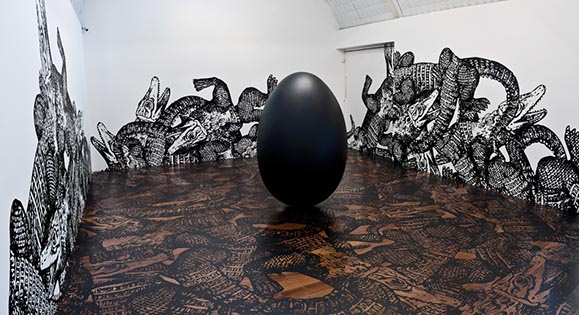
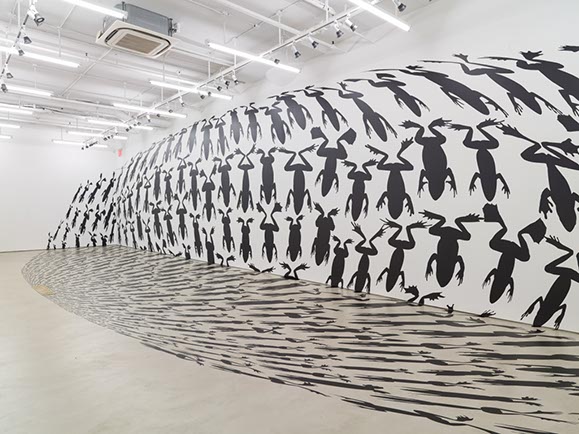
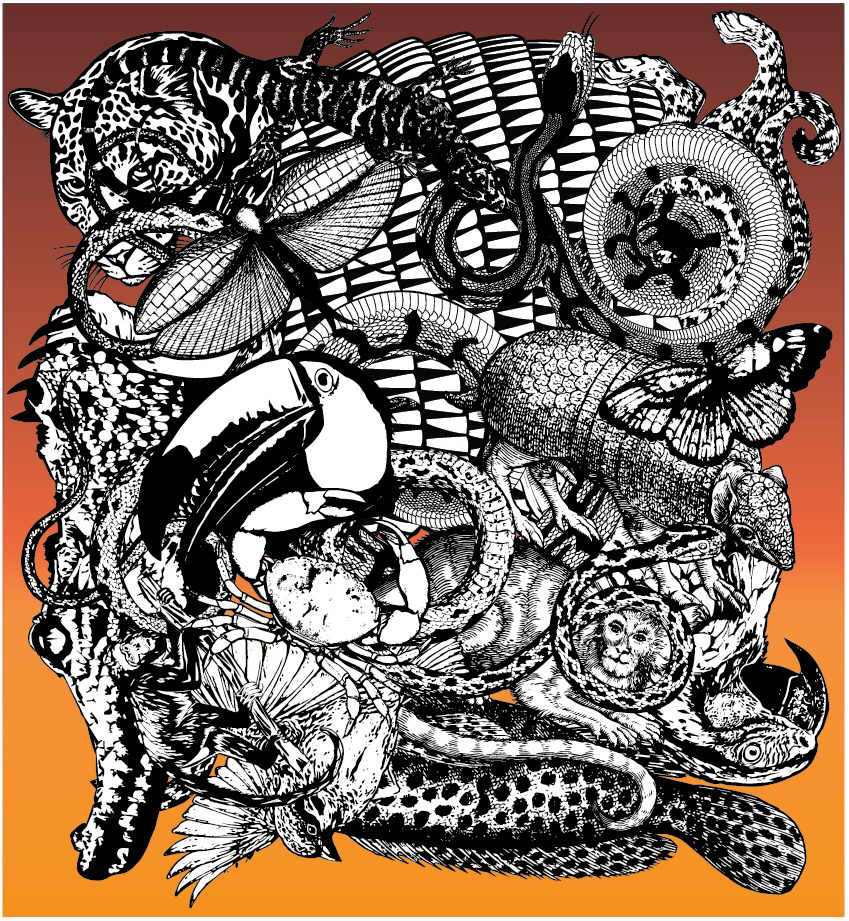

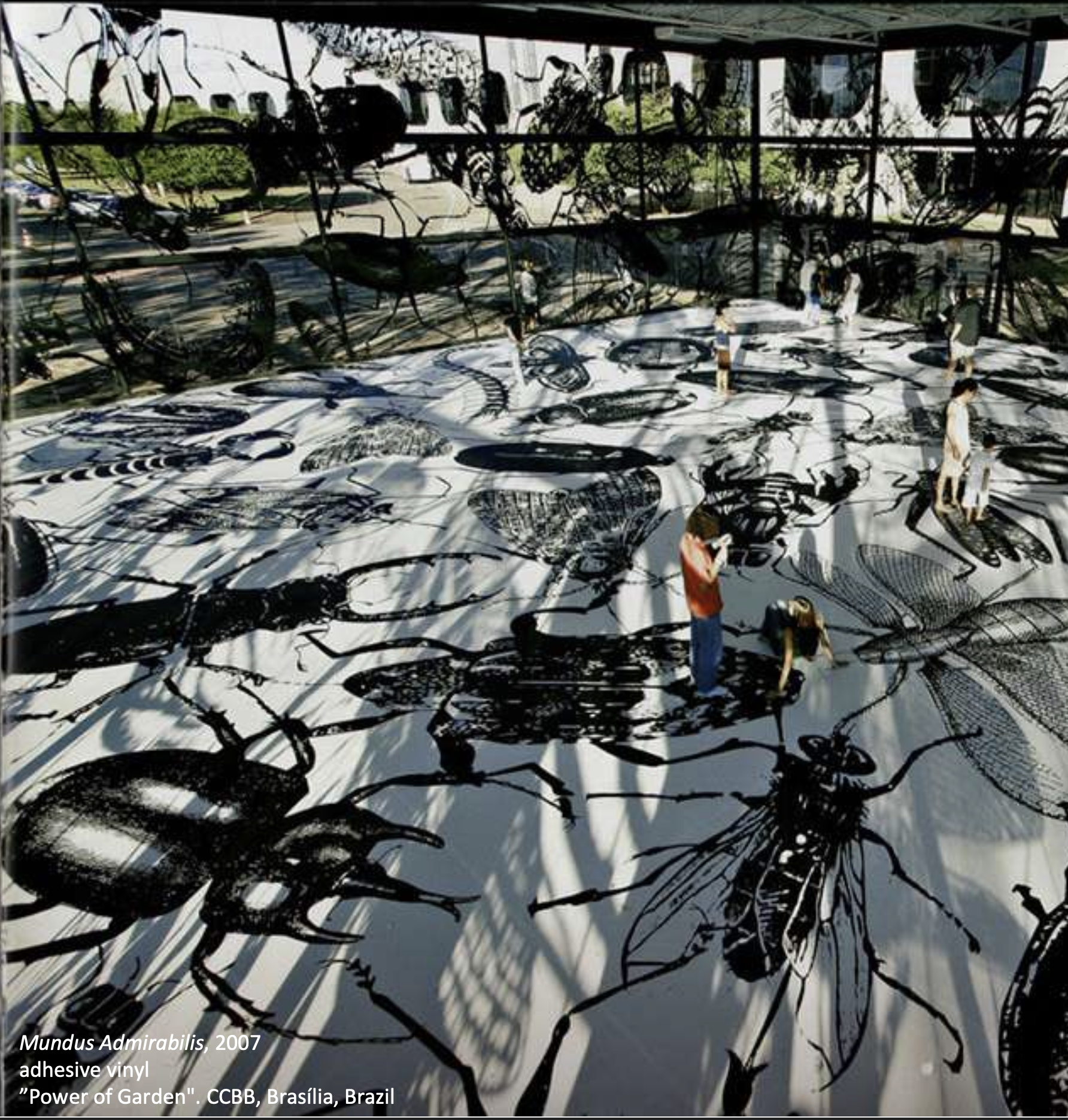
With this graphic animal life composed of a mixture of species, the artist initiated the Fauna Mix series, an extensive collection of tapestries, as well as the Tropicals series of carpets. The latter were permanently installed in the lobby of a large, international-style hotel, perfectly suited to the artist’s “exotic” motifs. Here, the artist explored the effect of stepping on insects that were always larger than one’s feet, creating an immersive and thought-provoking experience.
During the pandemic, the artist further expanded this repertoire by associating it with interactive environmental projections in the work Colloquium, the first in the sequence that precedes e-ARENA. Colloquium were originally commissioned to explore the challenges of communication among different species, Colloquium was presented at the Museu of Image and Sound in São Paulo (2022) as part of an exhibition specially dedicated to children.
Technical description and requirements
IMPORTANT:
The set up can adapt to the room and environment proposed for the piece. The installation depends on
- one computer to run the application: (i7 minimum [Mac ore PC] at least)
- one sensor (camera connected to the computer running the application)
- one computer to output the mapped video (that receive video from the other computer and send it to a number of projectors OR LED walls)
- multi source sound system (5.1 at least to produce a more immersive experience)
See more infos in the document below (download it for deeper understanding):